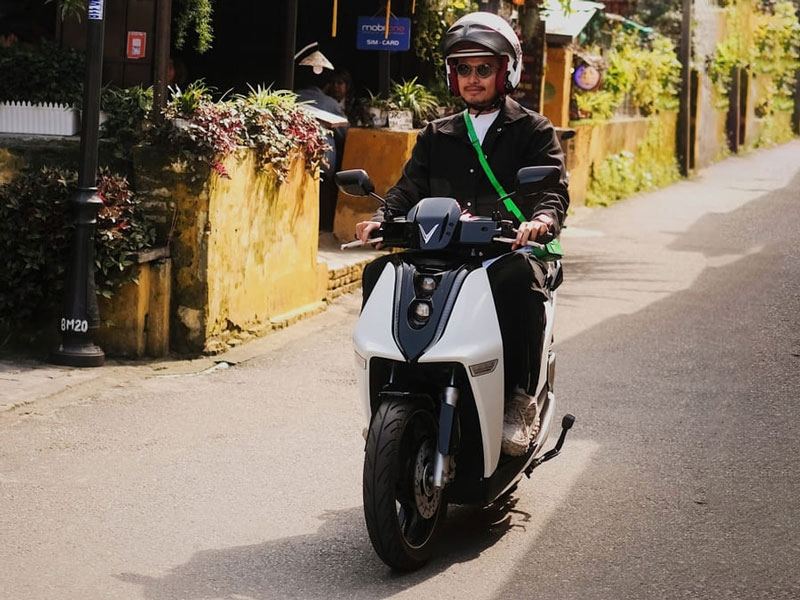
Over the past 24 hours, the green tourism market in Hoi An has recorded a powerful boom in high-tech electric scooter rental services. Directed towards becoming an eco-tourism city, Hoi An is becoming a hotspot for zero-emission mobility models. Below is a summary of the 5 latest notes and trends that tourists must know before renting an electric scooter here.
Instead of using traditional electric scooters that require 3 to 8 hours of charging, the trend of renting quick battery-swapping electric scooters is becoming the top preference for tourists in Hoi An. Major rental operators, such as Selex Motors in partnership with local homestays and resorts, have established over 10 automatic battery-swapping stations around the ancient town and An Bang and Cua Dai beaches. Tourists take less than 2 minutes to swap a fully charged battery at the station without waiting, ensuring an uninterrupted journey of exploration.
To stimulate green tourism, electric scooter rental businesses in Hoi An have launched a series of major promotion programs today. Notably, the 'Green Summer' combo package offers an immediate 20% discount for rentals exceeding 48 hours, free digital maps of charging/swapping stations, and a free first battery swap. Some units also partner with major cafes in the ancient town to offer a 15% discount voucher on drinks for tourists traveling by rented electric vehicles.
Hoi An city authorities have tightened regulations on movement in pedestrian zones. Tourists should note: electric scooters are not allowed to operate in pedestrian streets (such as Tran Phu, Nguyen Thai Hoc, Bach Dang) during restricted hours (9:00 - 11:00 and 15:00 - 21:30 daily). Violations may lead to vehicle impoundment or administrative fines. When renting a bike, ask the rental shop to provide a detailed map of permitted routes.
Due to the high frequency of tourist electric vehicle operations, experts recommend that tourists perform a strict inspection process before signing the rental contract:
A new point to note in the past 24 hours is the change in rental contract terms. Because EV batteries (especially Lithium-ion batteries of the new generation battery-swapping models) are highly valuable (accounting for 30-40% of the vehicle value), rental shops now require a clear battery preservation commitment. Tourists should choose reputable rental providers with comprehensive damage and battery insurance policies to avoid unwanted financial disputes in case of accidents.
27-05-26 13:15:27




100 Phan Chu Trinh Street, Hoi An Ward, Da Nang City
From 8 AM to 8 PM, every day of the week.